HKD 1,200,000 - 1,600,000
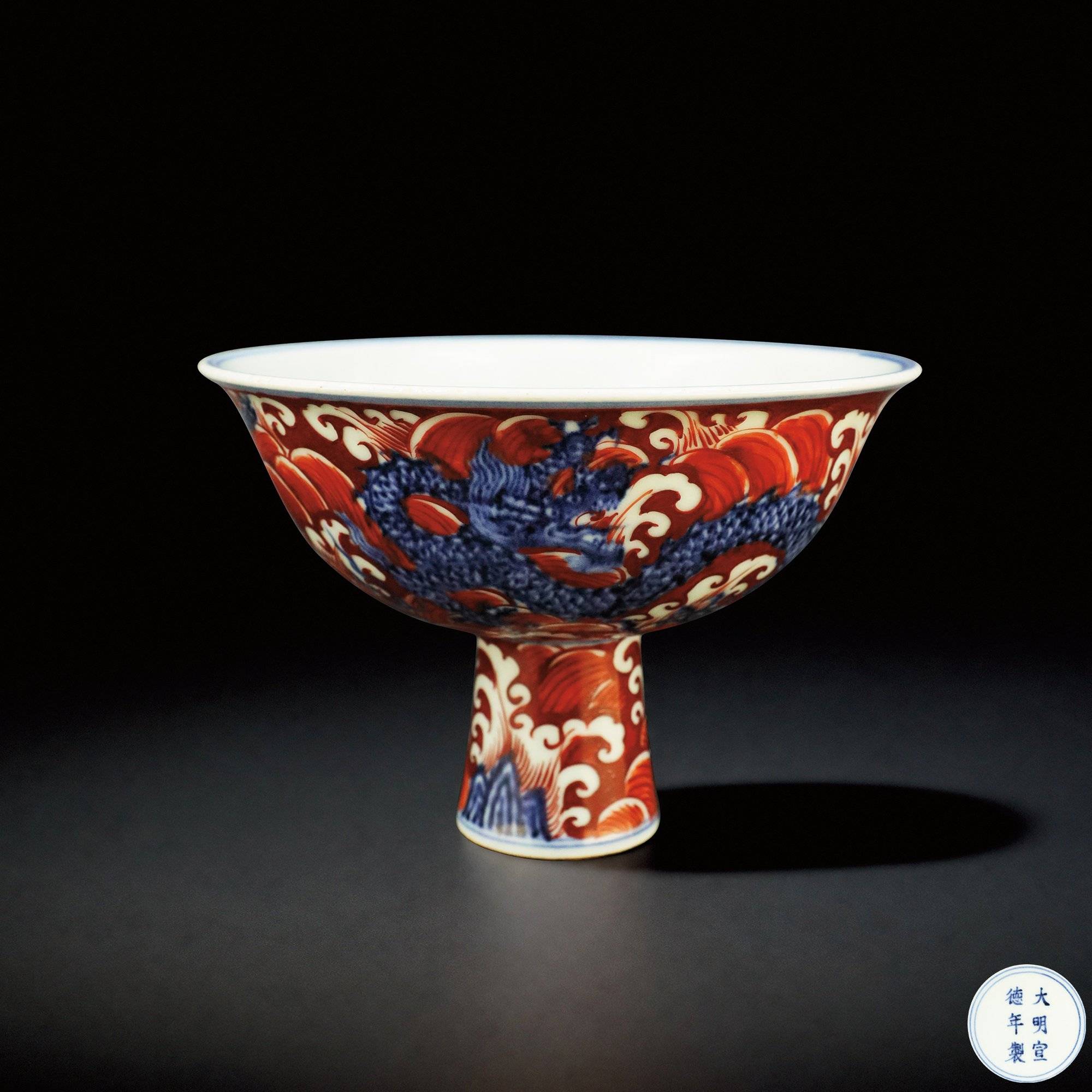
During the Xuande period of the Ming dynasty, the Imperial Kilns at Jingdezhen reached a high level of maturity in porcelain production, with the combination of underglaze blue and iron-red decoration becoming one of the distinctive decorative styles of the period. The present stem bowl is elegant in form and finely proportioned, with a robustly potted body covered throughout in a lustrous and pristine white glaze.
The exterior is finely decorated in underglaze blue with rolling sea waves, among which a ferocious dragon rendered in iron-red coils and moves with commanding presence. The contrasting blue and iron-red decoration creates a striking visual effect. The dragon is depicted with a powerful body and imposing posture, while the layered waves are rendered with clarity and rhythm. The overall composition is carefully balanced between densely and sparsely decorated areas, conveying both the vigorous character of Xuande imperial porcelain and the refined elegance associated with courtly taste.
Stem bowls occupy a distinctive place among Ming dynasty court porcelains. Their form inherited traditional prototypes while acquiring new stylistic characteristics during the period. The combination of underglaze blue and iron-red was likewise a particularly representative decorative language of Xuande imperial wares.
The base bears a six-character underglaze-blue kaishu mark reading “Da Ming Xuande Nian Zhi” (Made in the Xuande Period of the Great Ming Dynasty). The inscription is neatly written in a restrained and archaic manner, harmoniously complementing the overall character of the vessel.
Combining the classic form of Xuande imperial porcelain with the distinctive use of underglaze blue and iron-red decoration and the auspicious dragon-and-waves motif, the present stem bowl possesses considerable artistic and collecting appeal. It represents a characteristic expression of the aesthetic ideals and advanced ceramic craftsmanship of imperial porcelain produced during the Xuande period of the Ming dynasty.