HKD 3,800,000 - 5,800,000
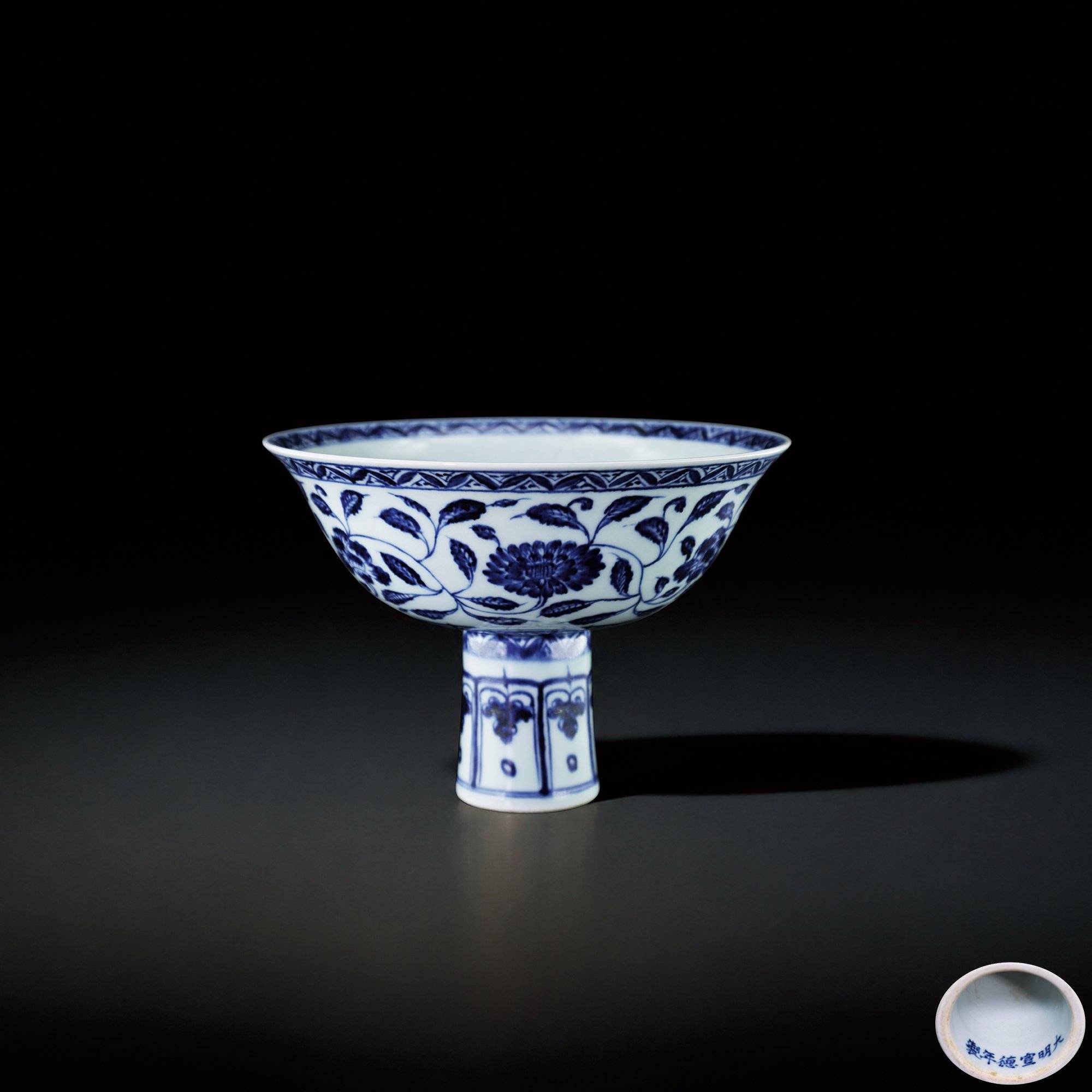
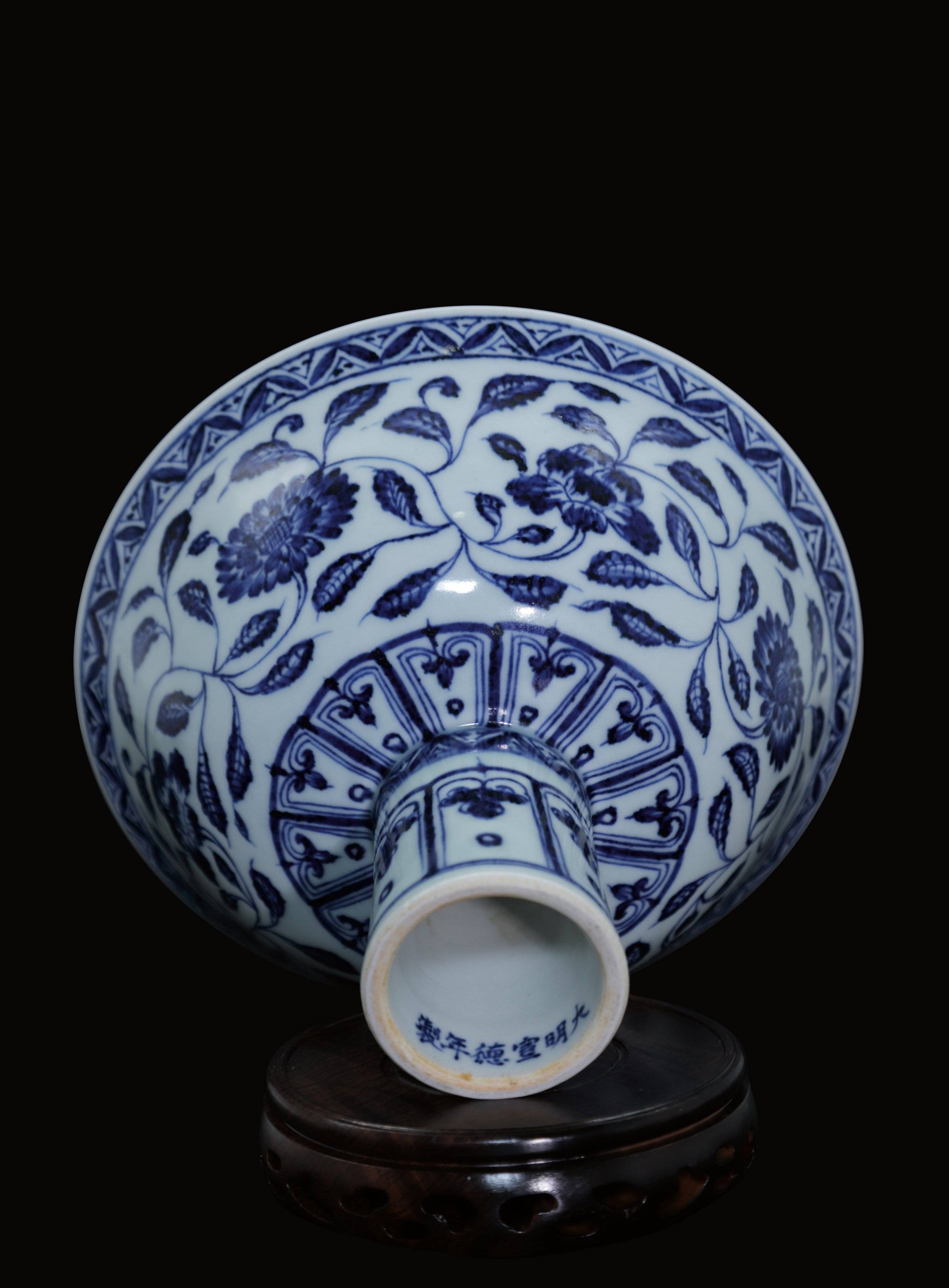
The present blue and white stem bowl is elegantly proportioned, with a flared rim, gently rounded body and hollow raised foot. Its tall, graceful silhouette combines the openness of a bowl with the refined elegance of a stem vessel. The entire body is covered in a lustrous white glaze and decorated in underglaze blue, with clearly articulated patterns covering both the interior and exterior.
A continuous band of geometric decoration encircles the inner rim, while an intricately carved dragon is subtly incised beneath the glaze on the interior wall. The decoration only becomes apparent when viewed under suitable light, representing a characteristic form of composite ornamentation associated with Ming imperial porcelain. Xuande-period imperial wares frequently combined painted underglaze-blue decoration with discreetly incised motifs, creating a sophisticated interplay between visible and concealed ornament.
The generous areas of undecorated glaze further accentuate the principal motifs. The interior base is framed by two concentric blue rings enclosing a scrolling floral design, with curling stems, leaves and blossoms interwoven in a dense yet orderly composition. The exterior is similarly decorated with luxuriant scrolling flowers, their blossoms in full bloom and foliage rhythmically distributed around the vessel. A band of radiating lotus petals is applied above the stem, creating a harmonious transition between the principal decoration and the foot.
The exterior of the stem is further divided into blue and white decorative registers, enhancing the vertical elegance of the form. The interior of the foot bears the six-character underglaze-blue reign mark, “Da Ming Xuande Nian Zhi”.
The underglaze blue is rich and intense, with subtle variations in tone and concentration, creating a striking contrast against the luminous white glaze. The overall effect is refined and archaic, with considerable visual depth and decorative rhythm.
The Xuande period represents one of the most important phases in the development of blue and white porcelain during the Ming dynasty. Stem bowls were also among the distinctive forms produced for the imperial court. By combining the elegant raised-foot form with traditional scrolling floral decoration and the sophisticated technique of concealed incised ornament, the present example reflects both the refined functionality and distinctive aesthetic character of Xuande-period imperial porcelain.