HKD 150,000 - 250,000
During the Kangxi period of the Qing dynasty, social stability enabled the imperial kilns to revive and further develop traditional ceramic techniques. Iron-red decoration, produced with iron oxide as the coloring agent and fired at a low temperature in a secondary firing, typically ranges from rich date-red to vivid orange-red tones. Its deep, substantial coloration and bold, vigorous style form a distinctive reflection of the artistic spirit of the early Qing dynasty.
Emperor Kangxi developed a strong appreciation for Chenghua porcelains of the Ming dynasty, encouraging the revival of archaistic styles. Marks imitating Chenghua reign marks, such as “Chenghua Nian Zao,” are traditionally referred to as “apocryphal marks” or “honorific marks” (jituo kuan). Following the lifting of maritime restrictions, Qing porcelains became increasingly important in overseas trade. According to Zhu Yan’s Qing-dynasty text Tao Shuo, the technical sophistication of Kangxi porcelain made such wares highly prized in Europe during the seventeenth and eighteenth centuries, where they were treasured by aristocratic collectors and became enduring witnesses to cultural exchange between China and the West.
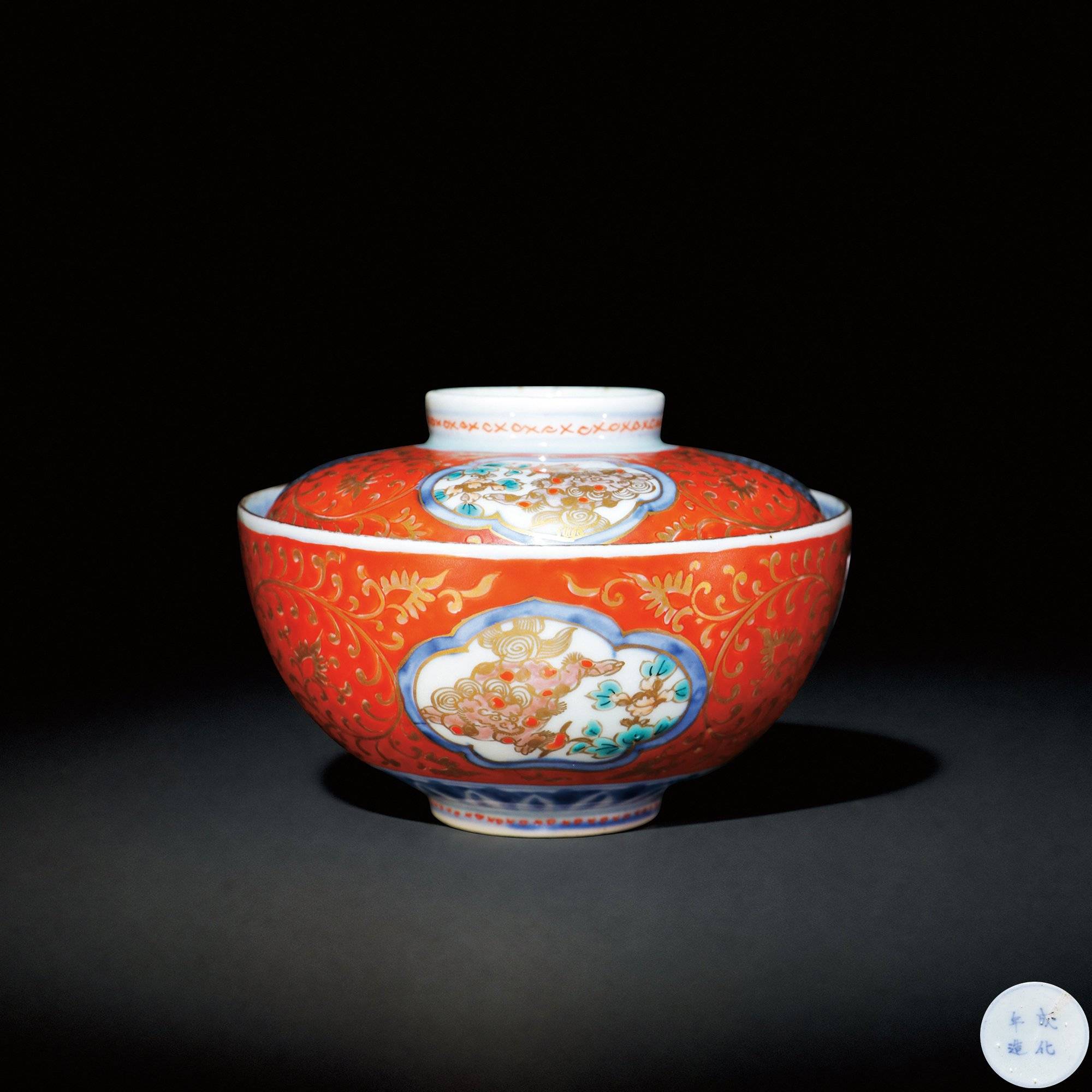
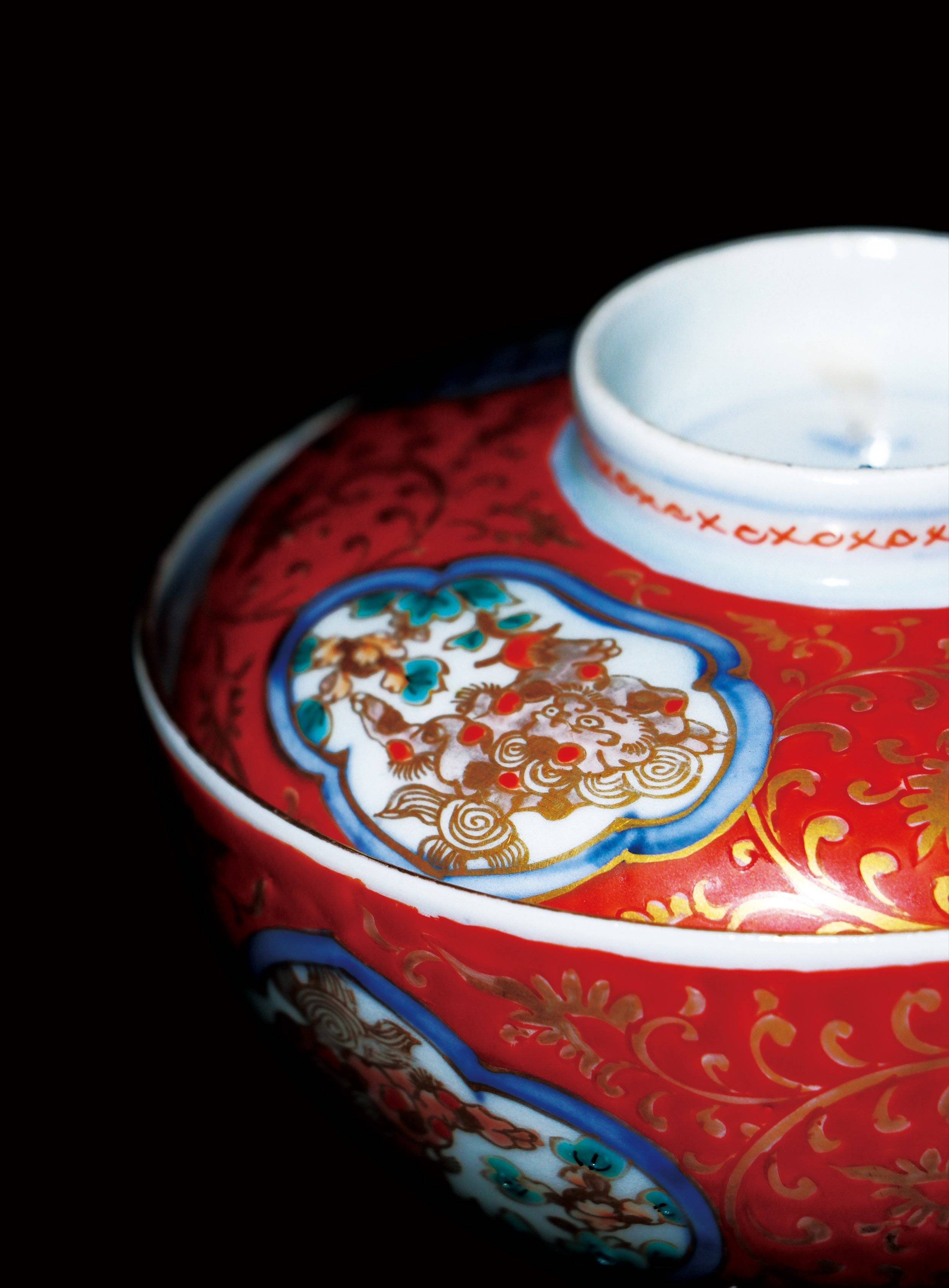
The present Kangxi-period covered bowl, decorated in iron-red, gilt and underglaze blue with a fish-and-aquatic-plants motif, exemplifies the refined courtly aesthetic of Qing imperial porcelain. The domed cover is full and elegantly rounded, fitting neatly onto the bowl. The bowl itself has a deep body, slightly everted rim and a well-proportioned foot, resulting in a restrained and balanced silhouette characteristic of Kangxi-period refined wares.
The exterior is richly decorated with a lustrous iron-red ground of deep and even coloration. The interior is covered in a clear, luminous white glaze. Four quatrefoil panels are symmetrically arranged around the exterior, each enclosing a powerful auspicious beast rendered with a vigorous and imposing posture. The scales are articulated with remarkable dimensionality and movement, while scrolling floral motifs further enrich the composition, conveying auspicious wishes for protection, prosperity and good fortune.
Surrounding the panels is an intricate iron-red diaper ground with scrolling foliage, executed with fine and closely spaced detailing. The continuous pattern symbolizes enduring prosperity and abundance. At the center of the bowl, an underglaze-blue fish-and-aquatic-plants design is rendered with lively and elegant brushwork, evoking the auspicious symbolism of nian nian you yu—“may there be abundance year after year.”
The principal decorative technique of the present piece is exceptionally elaborate gilding. Extensive gilt detailing is applied throughout, representing a particularly luxurious level of decoration associated with high-grade export porcelain. Gilt outlines define the iron-red borders; scrolling foliage is highlighted with fine gold lines; the borders of the panels are carefully traced in gilt; and additional gilding accents the fur of the auspicious beasts, the veins of the floral motifs and the delicate details of the fish and aquatic plants. The surviving gilding possesses a soft and elegant luminosity, together with the naturally mellowed appearance and subtle wear characteristic of aged gold decoration.
Combining the robust aesthetic of the Kangxi period with sophisticated polychrome and gilt decoration, the present covered bowl is distinguished by its historical character, technical refinement and decorative richness. Its harmonious combination of archaistic inspiration, imperial taste and export-oriented decorative craftsmanship makes it a noteworthy example of Qing dynasty porcelain.